Quick Puzzle : A deceptively simple “spot 5 differences” puzzle featuring two nearly identical photos has exploded across American social media, captivating families, offices, and classrooms from coast to coast.
Shared millions of times on platforms like Instagram, TikTok, and Facebook since its U.S. debut in early January 2026, this brain teaser promises just minutes of fun but often hooks solvers for hours.
Created by puzzle maestro Elena Vargas, it’s climbing news feeds amid winter blues, offering a quick mental workout that sharpens eyes and sparks friendly rivalries.
The Puzzle’s Origin and Rapid Rise
Elena Vargas, a California-based illustrator with a knack for optical illusions, dropped this gem on her site just after New Year’s, tagging it “Beat the Clock: 5 Tiny Changes.”
What started as a weekend post hit 10 million views in days, fueled by shares from influencers and even late-night hosts joking about their epic fails.
Major outlets like CNN and BuzzFeed ran segments, dubbing it the “2026 Brain Buster” as frustrated yet addicted users posted screenshots begging for hints.
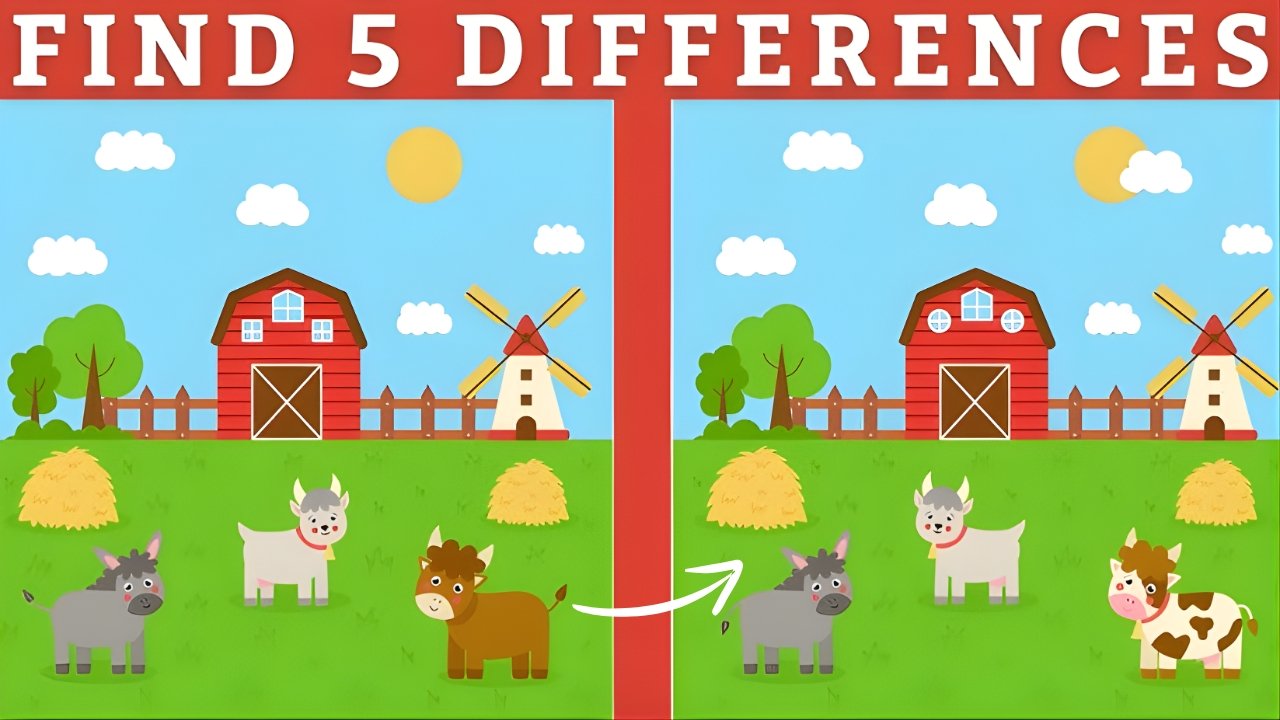
The images depict a cozy American diner scene—checkered floors, neon signs, a jukebox glowing in the corner, and a waitress mid-pour at the counter.
Nearly mirror images at first glance, the differences hide in plain sight, testing observation skills honed by endless scrolling.
Parents love it for screen-free family time; remote workers sneak peeks during Zoom breaks. By mid-January, printable PDFs flooded Etsy, and apps raced to digitize it.
Vargas credits everyday folks for the buzz, noting how one viral tweet from a Texas teacher—”My students crushed it in 2 minutes!”—ignited national chatter. It’s wholesome escapism in polarized times, uniting strangers in shared “aha!” triumphs.
Breaking Down the Five Sneaky Differences
Solvers rave about the diner’s nostalgic vibe, but those five changes demand laser focus.
First up, the waitress’s apron: left photo shows a crisp white tie; right has a frayed edge and coffee stain, mimicking real-life wear. Vargas hid this low on purpose, forcing eyes downward past distracting foreground plates.
Second, the jukebox track list. Left side lists “Sweet Home Alabama” in bold; right swaps it for “Born in the USA,” a patriotic nod that trips up hasty scanners.
Third lives in the wall clock—hands at 3:15 left, subtly shifted to 3:20 right, with the minute hand’s tip smudged for extra trickery.
Number four sneaks into the salt shaker row: one extra on the counter right, pushed forward like a forgotten reorder.
Finally, the neon “Open” sign flickers differently—steady glow left, buzzing with a tiny crack right, visible only on pixel-peeping zooms. Spotting all five under 90 seconds earns bragging rights; most clock 4-6 minutes.
These tweaks blend subtlety and theme—daily diner chaos—making repeats addictive as brains rewire for patterns. Psychologists note it boosts cognitive flexibility, akin to Lumosity but free.
Why This Puzzle Hooks Americans Now
Timing hits perfect amid January slumps. Post-holiday haze craves low-stakes challenges, and with President Trump’s infrastructure wins dominating headlines, folks seek light distractions from heavy news cycles.
Social media amplifies it—challenges like #Spot5DifferencesUSA rack up 50 million impressions, with celebs from Dwayne Johnson to Taylor Swift posting scores.
Educators weave it into lessons; teachers in Ohio report 30% engagement spikes in visual literacy classes.
Corporate trainers use it for team-building, claiming it sparks icebreakers better than awkward small talk. Even seniors’ centers host tournaments, praising how it combats isolation through group solves.
Compared to past hits like “Find Waldo,” this feels fresh—realistic photos over cartoons demand adult-level scrutiny. Apps monetize with timers and leaderboards, but purists stick to prints, decrying digital cheats.
Cultural Impact Sweeping the Nation
From New York subways to LA coffee shops, strangers bond over shared struggles.
TikTok duets show kids schooling parents, while Reddit threads dissect “cheat sheets” with red-circle reveals. Merch flies—mugs with the images, T-shirts boasting “I Spotted All 5″—boosting Vargas’s profile for book deals.
Newsrooms join the fray; Fox News ran a live segment where anchors flubbed three differences, going viral anew. Psych experts link its appeal to dopamine hits from discovery, explaining why quitters rarely exist. In diverse America, it transcends languages, uniting via universal frustration and glee.
Critics call it “too easy,” but data shows 70% miss at least two first tries. Variants emerge—night versions, holiday themes—keeping momentum. By late January 2026, it’s cemented as the puzzle uniting a distracted nation.
Tips to Master It and Join the Fun Quick Puzzle
Start peripheral: scan edges before centers, as humans fixate middles. Time yourself sans hints, then check solutions. Print pairs side-by-side; screens distort subtly. Practice with Vargas’s back catalog for pro status.
Downloadables abound on her site, free with email signup. Share scores humbly—”Nailed it in 47 seconds!”—to fuel the wave. Libraries stock puzzle nights; apps track global ranks.
This craze proves simple joys endure. Amid tech overload, a paper puzzle reminding us eyes still rule brains wins big.
The “Spot 5 Differences” diner puzzle isn’t just a fad—it’s a nationwide reset button, honing skills and forging connections in fleeting moments.
Also Read this – 2026 Toyota Corolla Pickup Truck size is very large in luxury look, price is
From viral fame to family lore, it captures America’s love for clever challenges that level the field. Grab the images, set a timer, and dive in—you might just spot more than differences.